How to Run a Pilates Studio: A Practical Guide for Studio Owners
Running a pilates studio looks simple from the outside. But anyone who has done it knows how much happens behind the scenes: answering booking requests on WhatsApp, checking who has paid, counting remaining sessions on member packages, and putting together a monthly report for business review.
This guide walks through every area of pilates studio management — and how to handle each one efficiently.
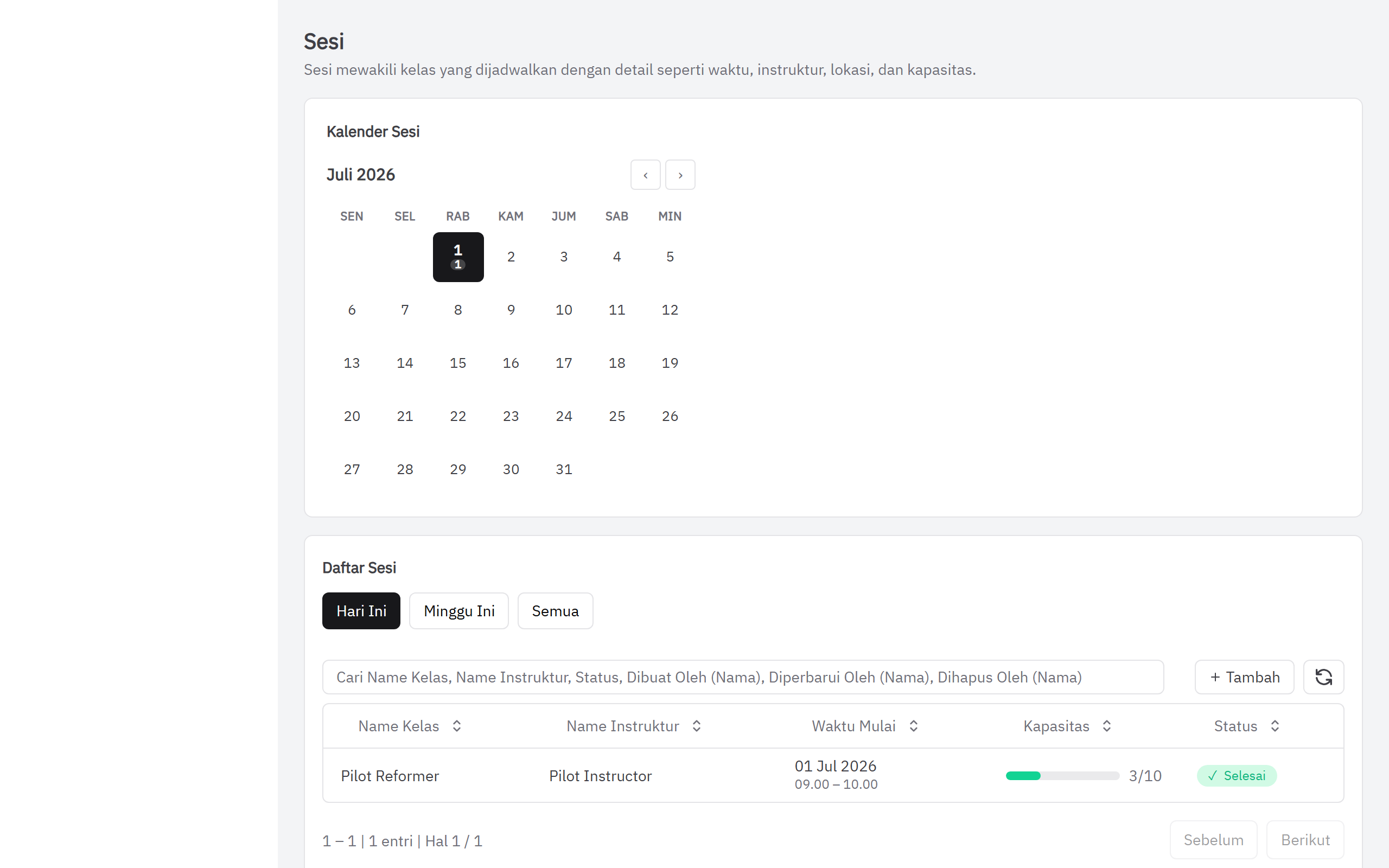
1. Class Scheduling: The Foundation of Your Operations
A well-organized schedule is the foundation of everything else. You need to manage:
- Class types: regular group, private, small group (2–4 people)
- Instructor per slot: prevent double-booking
- Capacity: how many members can join each class
- Exceptions: public holidays, instructor leave
Inconsistent scheduling is one of the top reasons members leave. Every last-minute change needs to reach the affected members quickly.
2. Booking: Stop Relying on WhatsApp
Manual booking via WhatsApp works when your studio has 10–15 active members. As membership grows, it becomes a real problem:
- Messages get missed
- No automatic confirmation
- Hard to track who has booked which slot
- Admin needs to watch the chat all day
A good online booking system lets members view the schedule and book themselves, while you get a clear view of who is attending which class.
3. Member Management: More Than a Contact List
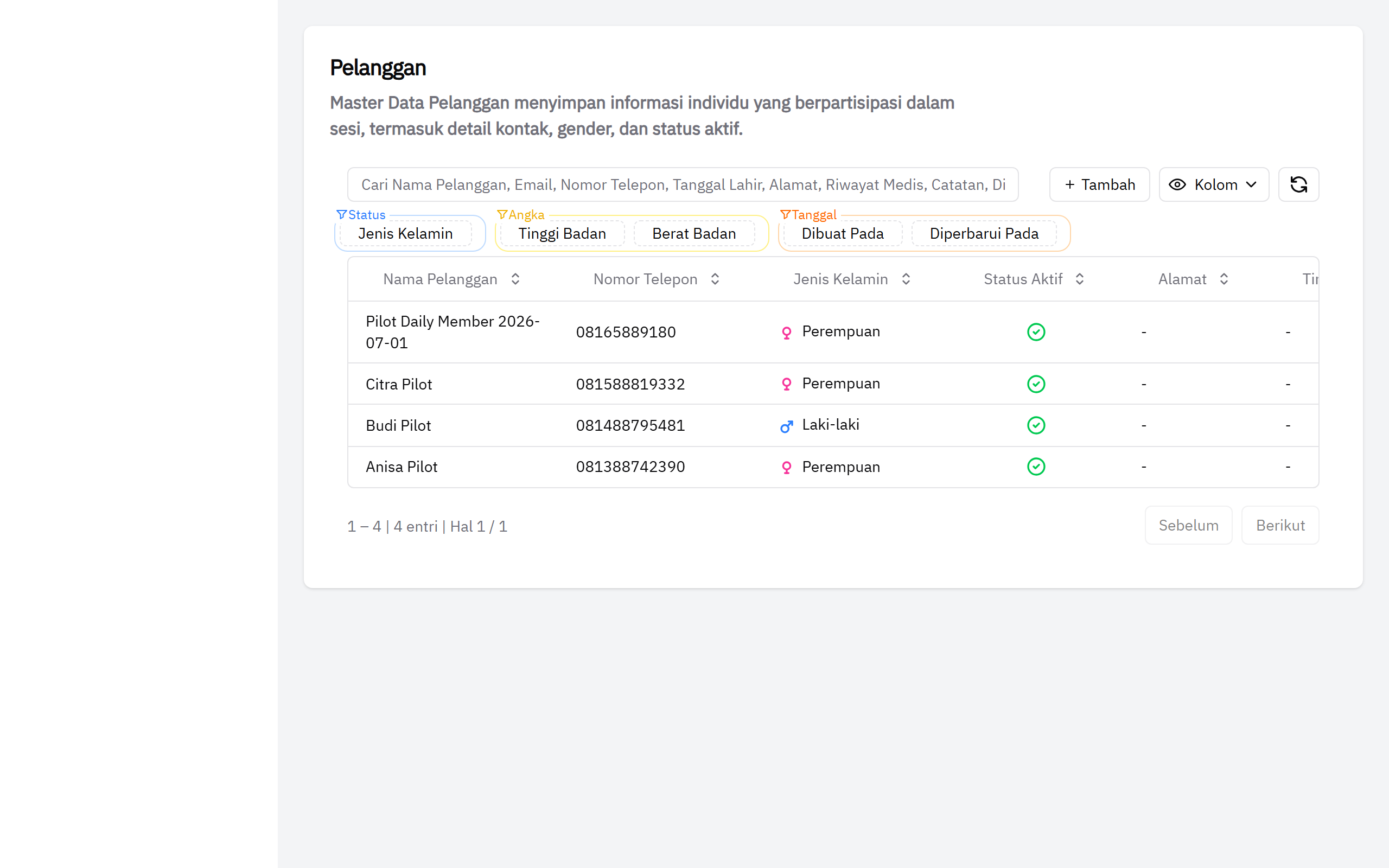
Complete member records help instructors deliver better, more personal sessions. Important information to keep:
- Contact details: name, WhatsApp number, email
- Health notes: physical conditions the instructor needs to know about
- Class history: which classes attended, with which instructor
- Package status: active package, remaining sessions, expiry date
This data doesn’t need to live in three different places. One central system saves time and reduces errors. Read the full guide to pilates studio member management — data, history, and session tracking.
4. Packages and Subscriptions: A Fair, Transparent System
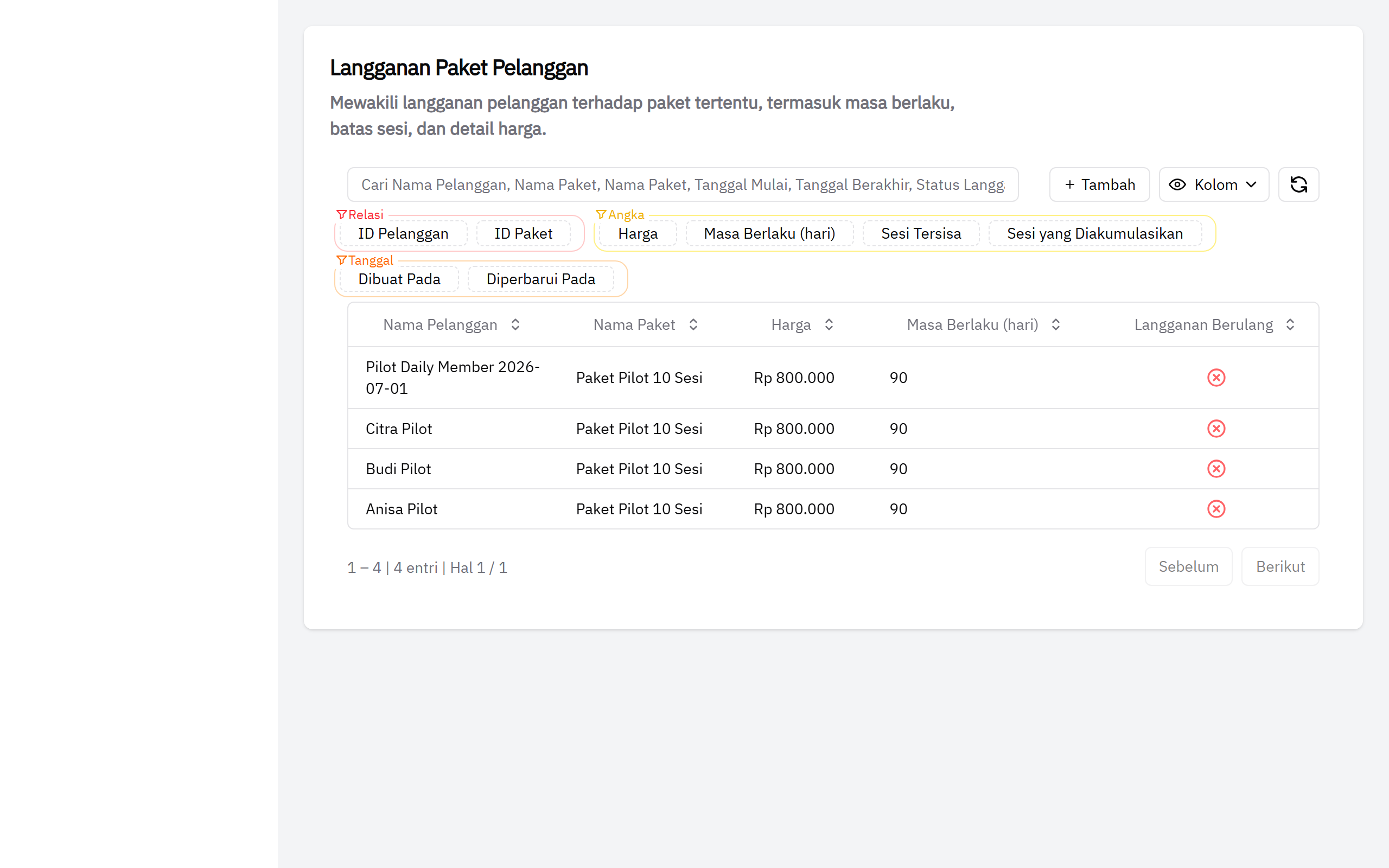
Common package options at Indonesian pilates studios:
- Session packs: 5, 10, or 20 sessions to use within a set period
- Monthly unlimited: unlimited class access for one month
- Drop-in: single class for members who don’t want to commit to a package
The most common friction: members questioning their remaining session count, or feeling a session was not recorded. A good system logs every attendance automatically and shows remaining sessions clearly.
5. Payment Recording: Nothing Gets Lost
Payments at Indonesian pilates studios typically come via bank transfer, QRIS, or cash. What needs to be managed:
- Payment confirmation: transfer proof should be uploadable and stored
- Per-member status: who has paid, who hasn’t
- Transaction history: auditable at any time
Spreadsheets can handle this, but as membership grows, monthly reconciliation becomes very time-consuming. See our ForEach vs spreadsheet comparison for a guide on when it makes sense to switch, or follow the step-by-step guide to migrating from a spreadsheet to studio software when you’re ready to make the move.
Related: a clear booking system is also one of the most effective ways to cut no-shows — read how to reduce no-shows at your pilates studio for the full strategy.
6. Reports: Data for Business Decisions
Useful reports for a studio owner:
- Attendance by class: which classes are most popular, which can be optimized
- Monthly revenue: total income, by source
- Active vs churned members: how many renewed, how many didn’t return
This data supports better decisions about scheduling, pricing, and promotions.
Software That Helps
All of the above can be managed with the right studio management software. ForEach Pilates is built specifically for pilates studios in Indonesia — scheduling, online booking, member and package management, payment recording with proof uploads, and CSV/Excel reports.
Starting at Rp 200,000/month for the first 5 studios — see the full cost breakdown and comparison. Contact us via WhatsApp for a free demo or more information.